
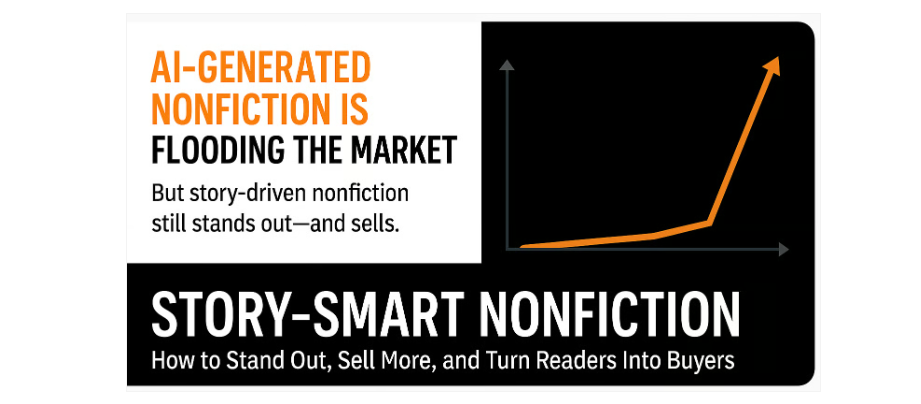
Story-Smart Nonfiction by Geoff Shaw
$39.00 Original price was: $39.00.$17.00Current price is: $17.00.
✔︎ 24/7 Customer support & Fast chat
✔︎ You can Request courses
✔︎Good Quality of coursesGuaranteed safe checkout


Introduction
In today’s digital world, information is everywhere—but attention is rare. Readers don’t just want facts; they want meaning, emotion, and narrative flow. That’s exactly where Story-Smart Nonfiction by Geoff Shaw becomes a game-changing framework for writers.
Whether you’re an entrepreneur building authority, a blogger creating long-form content, a journalist crafting features, or an author writing a memoir, mastering narrative nonfiction separates average writing from unforgettable work.
This guide explores the philosophy, structure, techniques, and applications behind this powerful storytelling approach—so you can apply it immediately to your own writing.
What Is Story-Smart Nonfiction?
Story-smart writing is the art of blending factual accuracy with narrative structure. It turns information into experience.
Instead of presenting data like this:
“The company grew by 47% in 18 months.”
A story-smart approach would say:
“Eighteen months after nearly shutting its doors, the company stood taller than ever—revenues up 47%, and the same team that once feared layoffs now celebrating record growth.”
Same fact. Different impact.
The difference lies in structure, tension, character focus, and emotional rhythm.
Why Narrative Nonfiction Works
Human brains are wired for story. Research in neuroscience shows that storytelling activates more regions of the brain than raw data alone. Stories create:
-
Emotional engagement
-
Higher retention
-
Greater persuasion
-
Stronger brand connection
-
Deeper reader trust
In business, marketing, journalism, and publishing, storytelling is no longer optional—it’s essential.
The Core Principles Behind Story-Smart Writing
1. Information Must Serve a Narrative Arc
Every strong nonfiction piece should follow a recognizable structure:
-
Situation
-
Complication
-
Conflict
-
Climax
-
Resolution
Even business case studies can follow this format.
Instead of presenting bullet points, you build tension and progression.
2. Characters Drive Engagement
Facts alone don’t move readers—people do.
Whether you’re writing about:
-
A startup founder
-
A scientist
-
A customer
-
Yourself
Readers connect through human perspective. The more specific the details, the stronger the connection.
3. Specificity Beats Generalization
Weak nonfiction says:
“Many people struggle with productivity.”
Story-smart nonfiction says:
“At 11:47 PM, Raj was still staring at his unfinished presentation—his third late night in a row.”
Specific scenes make readers feel present.
4. Scene Over Summary
Summaries inform. Scenes immerse.
Instead of summarizing events, recreate moments:
-
Dialogue
-
Environment
-
Body language
-
Emotional tension
This technique transforms educational or business content into compelling narrative.
5. Emotional Stakes Matter
Readers must understand what’s at risk.
-
What could be lost?
-
What could be gained?
-
Why does this matter now?
Without stakes, there is no urgency.
How to Apply Story-Smart Nonfiction to Different Formats
Blogging
Most blogs are informational dumps. To stand out:
-
Open with a story
-
Introduce tension
-
Provide insights through narrative progression
-
End with transformation
This structure increases dwell time and SEO performance naturally.
Business Case Studies
Instead of:
-
Problem
-
Solution
-
Results
Use:
-
A moment of crisis
-
The decision that changed everything
-
The struggle during implementation
-
The measurable breakthrough
Now the reader experiences the journey.
Memoir Writing
Memoir thrives on:
-
Personal vulnerability
-
Honest reflection
-
Scene reconstruction
-
Emotional honesty
The key is not just telling what happened—but showing how it felt.
Educational Content
Even how-to guides can use storytelling.
Example:
Instead of listing steps, follow one individual applying the steps. Show mistakes, challenges, and eventual success.
Learning becomes experiential rather than abstract.
Structure Blueprint for Powerful Nonfiction
Here’s a simplified structure model inspired by narrative craft:
1. Hook
Open with a vivid scene, bold claim, or emotional moment.
2. Context
Provide necessary background without overwhelming.
3. Rising Tension
Introduce complications, obstacles, or contradictions.
4. Insight or Turning Point
Reveal the key realization or shift.
5. Transformation
Show the measurable or emotional change.
6. Reflection
Offer takeaway lessons grounded in story.
This framework works for articles, books, speeches, and long-form content.
Common Mistakes Writers Make
Overloading With Data
Data supports narrative—it should not replace it.
Being Too Abstract
General advice lacks memorability.
Ignoring Emotional Movement
Even business content requires emotional flow.
Lack of Clear Structure
Without narrative architecture, readers feel lost.
Advanced Techniques for Expert Writers
Narrative Framing
Frame your nonfiction around a central question:
-
Can this business survive?
-
Will the experiment succeed?
-
Is the traditional belief wrong?
Questions create tension.
Foreshadowing
Hint at outcomes without revealing everything immediately.
Example:
“What happened next would redefine the company forever.”
Readers keep going to discover why.
Contrast and Juxtaposition
Compare:
-
Before vs After
-
Failure vs Success
-
Expectation vs Reality
Contrast strengthens impact.
Micro-Tension in Paragraphs
Each paragraph should raise curiosity:
-
What happened next?
-
Why did that matter?
-
How did it change things?
This keeps readers moving forward.
Why This Matters for Digital Entrepreneurs
If you run:
-
An online course platform
-
A content-based website
-
A personal brand
-
A product-driven business
Narrative-driven nonfiction increases:
-
Conversion rates
-
Engagement
-
Time on page
-
Brand authority
-
Reader loyalty
It also makes long-form SEO content feel less promotional and more authentic.
The Psychology Behind Story Impact
When readers encounter narrative:
-
They lower resistance
-
They empathize
-
They imagine themselves inside the story
-
They become more open to persuasion
Story bypasses defensive logic.
That’s why brands using narrative consistently outperform those using feature-heavy copy.
Turning Dry Topics Into Compelling Reads
Let’s say you’re writing about finance.
Instead of:
“Compound interest increases wealth over time.”
Write:
“At 22, Ankit invested ₹5,000 per month. By 35, that decision—made quietly, consistently—gave him options his friends didn’t have.”
Same concept. Greater resonance.
The Ethical Responsibility of Narrative Nonfiction
With storytelling power comes responsibility:
-
Stay truthful
-
Avoid manipulation
-
Don’t fabricate drama
-
Respect real people’s experiences
The goal is clarity and engagement—not exaggeration.
Building Authority Through Narrative
Authority isn’t built through jargon. It’s built through clarity.
When readers understand:
-
The stakes
-
The journey
-
The decisions
-
The results
They trust you.
Story-smart nonfiction builds expertise without arrogance.
The Long-Term Advantage
Writers who master narrative nonfiction:
-
Stand out in crowded markets
-
Build loyal audiences
-
Publish stronger books
-
Create memorable content
-
Influence readers more deeply
In an age of AI-generated information, authentic storytelling becomes even more valuable.
Final Thoughts
Storytelling isn’t just for novelists. It’s for leaders, educators, marketers, entrepreneurs, and creators.
By applying the principles found in Story-Smart Nonfiction by Geoff Shaw, you shift from merely informing readers to transforming them.
Facts tell.
Stories move.
Narrative persuades.
If you want your writing to:
-
Capture attention
-
Hold engagement
-
Inspire action
-
Build authority
Then narrative intelligence isn’t optional—it’s essential.
Related products
-
AI Courses
Max’s Shop – Grow Accounts + AI Method Bundle: The Ultimate Guide to Scaling Social Media with AI
$179.00Original price was: $179.00.$39.00Current price is: $39.00. Add to cart -
AI Courses
AI Assisted Agency 2026 by Daniel Fazio: The Future of Smart, Scalable Digital Businesses
$5,000.00Original price was: $5,000.00.$400.00Current price is: $400.00. Add to cart -
AI Courses
Vaughan Fawcett – GreymatterAI Academy
$35.00Original price was: $35.00.$17.00Current price is: $17.00. Add to cart -
AI Courses
AI Agents A-Z Community By David Gyori: The Ultimate Guide to Mastering AI Agents
$67.00Original price was: $67.00.$15.00Current price is: $15.00. Add to cart